
Collin County Record Search Clocks
Three official Collin County court tools can show different snapshots on the same day. The mobile-friendly Justice System App is described as updating around the clock. Broad Case Search refreshes once each day at 6 p.m. Case Record Inquiry updates in real time, but it asks the searcher to choose a case type first. A new filing or docket event can therefore be absent from one screen and present on another without either screen being wrong.
The county's case-information comparison lays out those roles. Its official comparison screen is shown here.
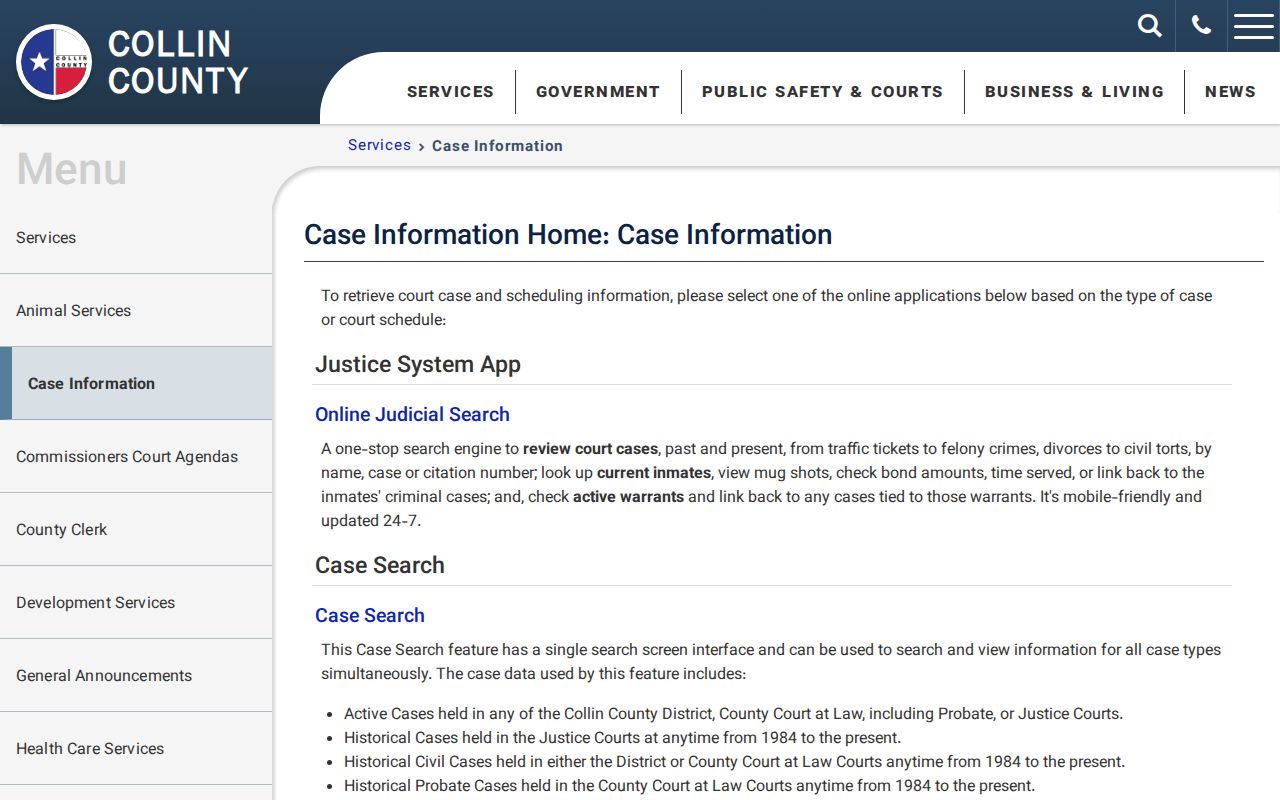
The key is to match the clock to the task. Use the broad search for range and older coverage, then check Inquiry when a same-day Collin County criminal case update matters.
| Search field | Use | Format note |
|---|---|---|
| Case type | Sets the court-record group | Inquiry requires this choice first |
| Search by | Selects name, case, or citation path | Special tools add inmate and warrant paths |
| Last name | Begins a party search | Try exact spelling before broader variants |
| Date of birth | Helps distinguish similar names | Public display may be limited |
| Case or citation number | Targets a known record | Use the complete number when known |
How to Check Criminal History in Collin County
Begin with the record type, not just a name. The Justice System App connects Collin County cases, inmate entries, bonds, warrants, and linked records. Prepare the full name, a date of birth when lawfully available, name variants, and any case, citation, booking, or warrant number. Those facts help separate people with similar names and narrow a long results list.
- Search the Justice System App for a current Collin County case, inmate, bond, or warrant connection.
- Run broad Case Search when older coverage or several case types may matter.
- Use Case Record Inquiry for a real-time, case-type-specific view.
- Ask the arresting agency for its incident or arrest report and the correct clerk for the filed court record.
- Request a certified copy from the clerk, or use Texas DPS channels for an official state-level self-review.
Recent custody also has its own path. The Collin County jail roster covers current inmates and releases within the prior day, while the Arrests & Releases Report covers up to one week. Neither proves that prosecutors filed a case or that a court entered a conviction.
| Need | First channel | Fallback |
|---|---|---|
| Filed felony case | District Clerk online search | Counter, mail, or email request |
| Filed misdemeanor | County Clerk criminal search | Correct County Court at Law clerk |
| Sheriff report | Open Records Request Portal | Written request or Records and Warrants phone line |
| Recent jail custody | Inmate roster | Detention line or in-person public lobby |
| State self-review | DPS fingerprint process | DPS personal-review instructions |
Collin County Sheriff Record Custody
The Sheriff's Office and Detention Facility at 4300 Community Avenue in McKinney holds records created through sheriff and jail work. Yet it does not act as one custodian for every Collin County criminal record. Law-enforcement, inmate, dispatch, medical, and personnel materials have separate custodians. Court files remain with the District Clerk, County Clerk, or the correct Justice Court.
The sheriff recommends its online request portal for speed, while a written request remains available. Useful details include the offense or call number, jailing date, incident place, involved names, and date range. Without an offense number, call number, or jailing date, the published search fee is $5.
The official Sheriff's Open Records page shows the request routes and record-location tips.
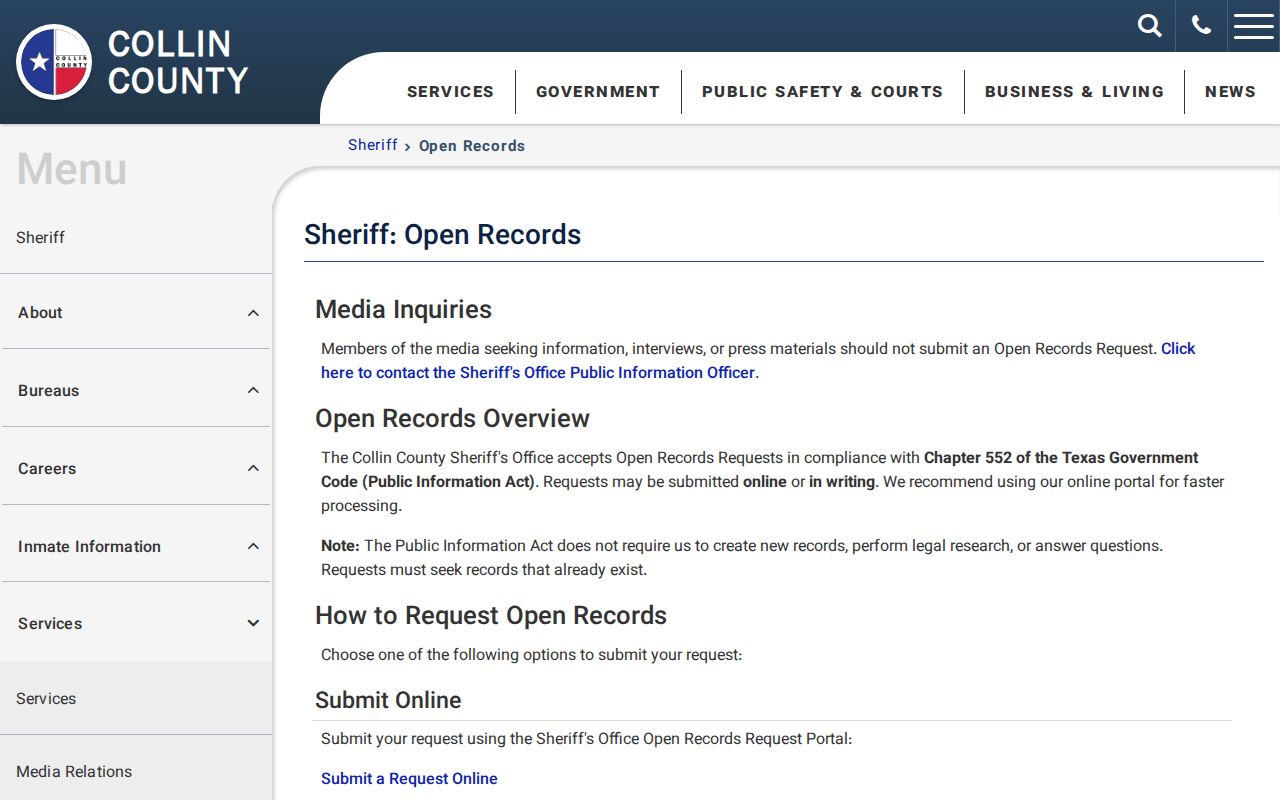
That split explains why a sheriff request should describe an existing record, while questions about a filed charge go to the clerk that owns the case.
Official Texas Background Checks
The Texas Department of Public Safety Crime Records Division keeps the state repository. Its paid CRS public name search returns the conviction and deferred-adjudication information Texas law permits DPS to release. Each search credit costs $3, plus the portal's stated card transaction fee. A no-result screen does not establish that no criminal history exists, because the public product is narrower than a complete identity-based record.
For review of one's own Texas record, the fingerprint route is more exact. DPS Fingerprint Applicant Services of Texas uses IdentoGO by IDEMIA for electronic capture. The authorizing agency supplies the service code, which controls where the result goes. A generic appointment can route a request incorrectly.
Enrollment begins on the official IdentoGO Texas appointment service.
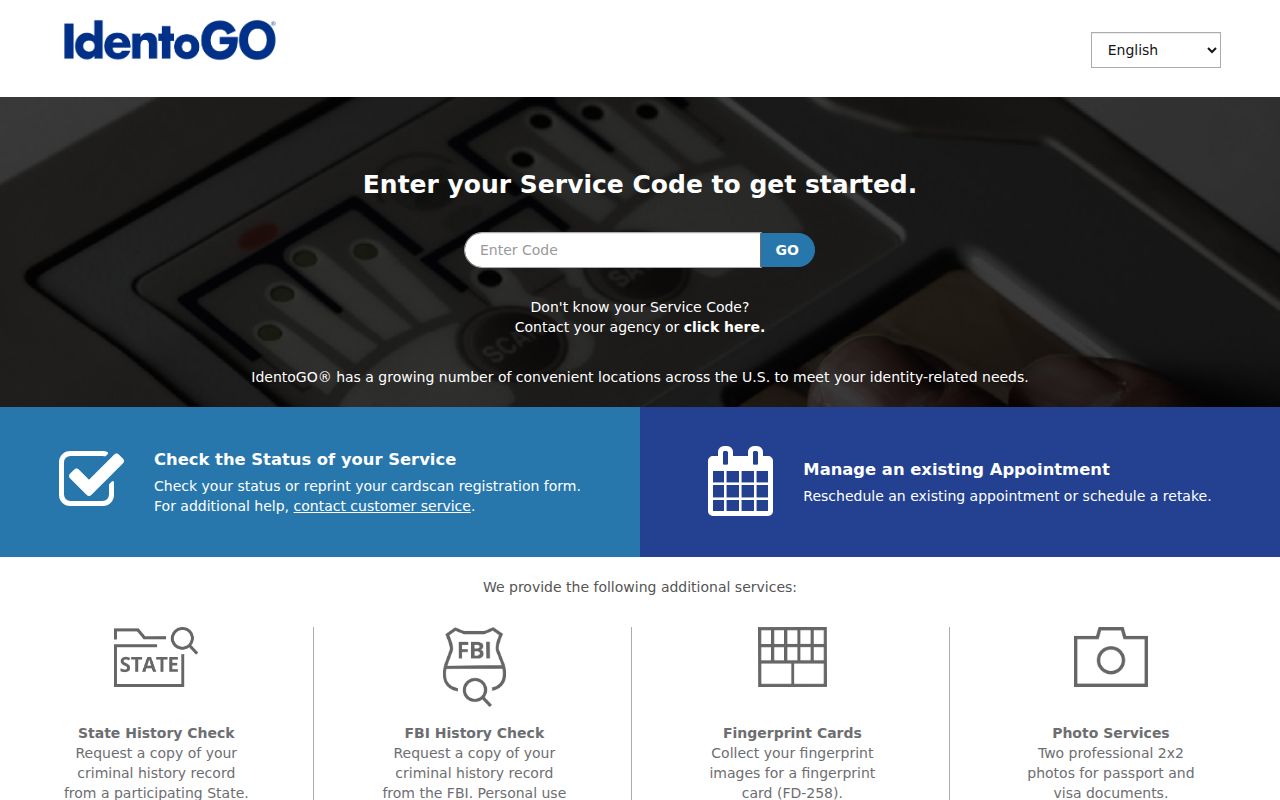
The enrollment screen asks for that service code before location, appointment, identity, and payment steps. The FBI Identity History Summary is a separate subject-only national fingerprint channel.
Older Collin County Criminal Cases
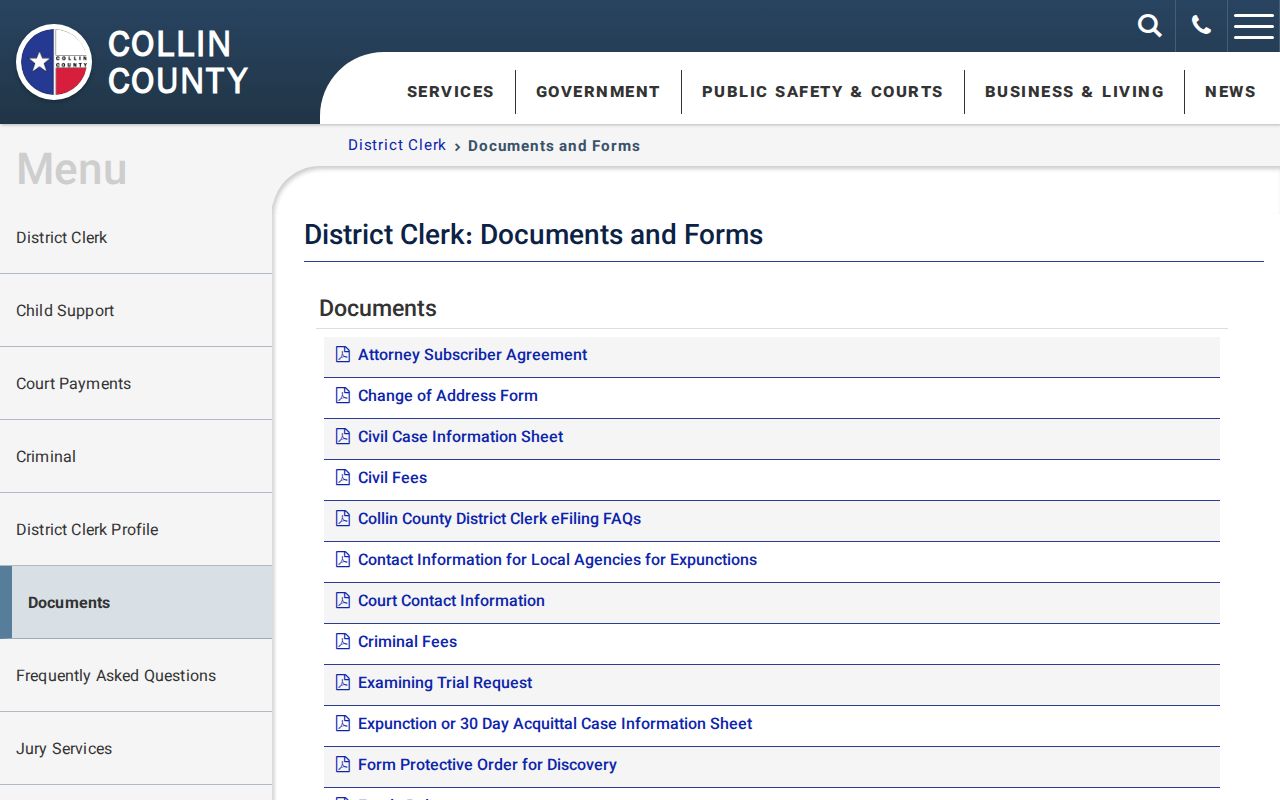
Online dates are a frequent trap. Felony history in broad Case Search begins in 1988, while County Court at Law criminal history begins in 2000. Completed Collin County felony cases from the 1800s through 1987 use the District Clerk's manual route. The request needs a complete name and date of birth. Mailed requests also need a self-addressed stamped envelope and $5 by check or money order. Cash is accepted in person, normal processing is one or two days, and the clerk does not conduct phone searches.
The District Clerk records office explains its felony role and older-record process.
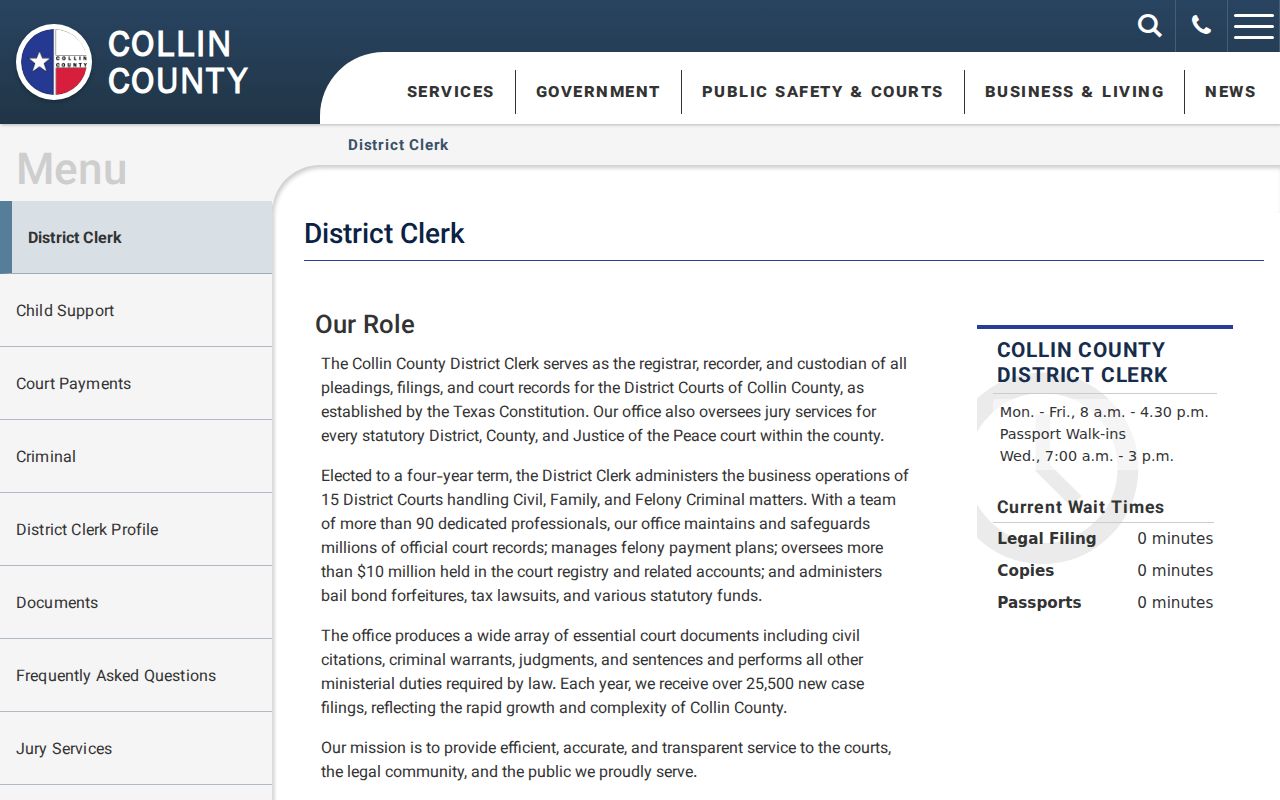
The clerk also publishes a dedicated request form among its documents and forms.
For an older misdemeanor missing online, contact the County Clerk staff for the relevant one of seven County Courts at Law instead.
Types of Criminal Records
A single Collin County event may create several records. The police account captures the first report. Jail data covers intake and custody. The prosecutor then decides what to file, and the clerk records what the court does. DPS connects fingerprint-linked arrest cycles with the outcomes agencies report back to the state.
- Incident report
- The creating police agency's account of a response, observations, witnesses, property, and initial offense class.
- Booking record
- The jail's intake file, with booking identity, time, custody, stated charge, bond, and release data.
- Court case file
- The clerk-held pleadings, charge, docket, orders, judgment, sentence, and costs for a filed case.
- DPS criminal history
- The fingerprint-linked state record; public CRS releases only the subset allowed for public dissemination.
- Warrant record
- The issuing court, linked case, allegation, warrant type, bond, and status, subject to access limits.
Registration and supervision add two more systems. The Texas Public Sex Offender Registry is statutory and separate. Collin County also provides OffenderWatch for free one-mile address searches and alerts. Incorporated-city registrants generally report to their police department, while the sheriff registrar serves unincorporated areas and places without their own police department.
Police and incident reports remain with the agency that created them. Plano incidents go to Plano Police, McKinney events to MPD, Frisco events to Frisco Police, and sheriff events through the sheriff portal. Texas offense classes also determine the court: felonies go to District Court, Class A and B misdemeanors to County Courts at Law, and fine-only Class C matters to municipal or Justice Courts within their jurisdiction.
Collin County Jail Record Windows
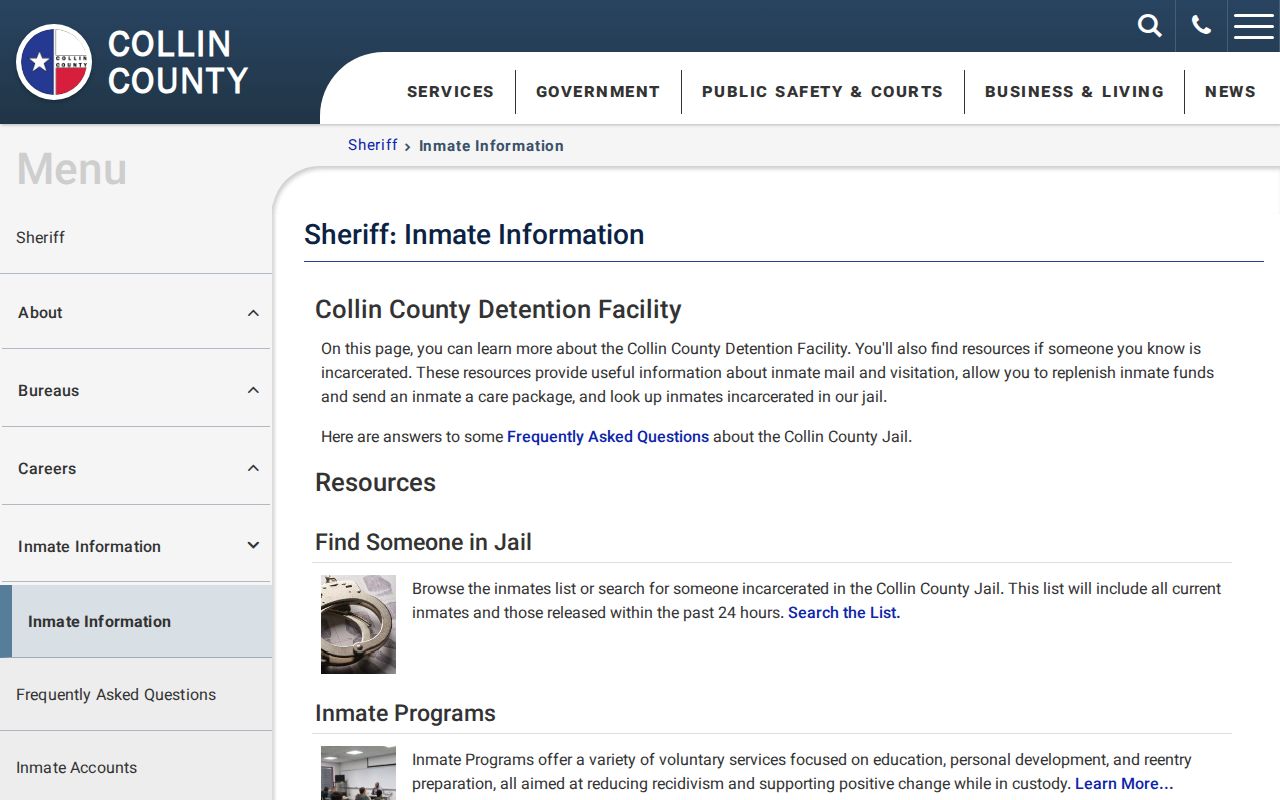
Two short windows answer different questions. The Collin County inmate roster shows people now housed at the adult detention facility plus those released within the preceding 24 hours. The Arrests & Releases Report looks back as far as one week. The first helps confirm present or just-ended custody. The second is better for rebuilding a recent arrest timeline.
The county's Inmate Information page links the roster and current jail resources.
Neither screen is a lasting arrest archive. For an older Collin County event, request the report from the arresting agency, search the court index for a filed case, and use DPS according to the state product's scope. After a prison transfer, use the TDCJ inmate information channels. Federal custody belongs in the Federal Bureau of Prisons locator.
Note: A release from the county roster may reflect transfer rather than the end of all custody.
What a Collin County Criminal Record Shows
Field content depends on the custodian. A Texas identity-based history centers on fingerprint-linked arrest cycles. A Collin County court file is richer about litigation, while a jail profile is richer about immediate custody. Police, prosecutor, and court labels can differ because each describes a different stage.
| Name and identifiers | Names, aliases, date of birth, state ID, FBI number when assigned, and tracking numbers, with public fields limited by law. |
|---|---|
| Arrest and booking | Event date, agency reference, booking number, intake time, current charge, bond, custody, and release status. |
| Case details | Case and court number, filed charge, docket events, attorneys, settings, bonds, warrants, and case status. |
| Outcome | Dismissal, plea, verdict, judgment, disposition date, sentence, costs, and supervision terms when reported. |
| Access limits | Juvenile, protected-victim, medical, sealed, expunged, and other confidential data may be withheld or suppressed. |
Read each field in context. An arrest charge is not a judgment, a bond is not a sentence, and a public photograph is not proof of guilt. The court disposition is the key filed-case outcome.
Collin County Warrant Search Gaps
The Active Warrants Report links public entries to associated cases, but Collin County warns that every warrant may not appear. Sealed matters, juvenile cases, operational holds, and newly issued or cleared warrants may be missing or delayed. A blank result must not be treated as proof that no warrant exists.
When a warrant may affect you, call Sheriff Records and Warrants at 972-547-5133 and contact the issuing clerk. District courts, County Courts at Law, Justice Courts, and city municipal courts each issue matters within their own reach. A constable precinct or narrow written request can add another check. McKinney P2C holds a separate city warrant search, and Texas has no complete public statewide warrant database.
Verify the issuing court before taking action. Ask it about appearance, counsel, bond, and clearance timing. An online payment is not a promise that a warrant clears at once.
Public Access Laws
Texas access rules follow the custodian. The Texas Public Information Act applies to agency records and permits exceptions. Judicial records follow court rules and common law, so Collin County sends court requests to the correct clerk. Criminal-history dissemination, juvenile confidentiality, registration, expunction, and nondisclosure each have separate statutes.
Key Texas laws:
Government Code Chapter 552 grants access to public information subject to law-enforcement, privacy, and other exceptions.
Government Code Chapter 411 controls criminal-history dissemination and orders of nondisclosure.
Code of Criminal Procedure Chapter 55A sets Texas expunction rules.
Code of Criminal Procedure Chapter 62 governs sex offender registration and public registry functions.
Active investigations, protected victims, confidential informants, driver data, medical facts, and juvenile material can be redacted or withheld. The PIA deadline for seeking an Attorney General decision is not a promise that the requested Collin County record will arrive within that same period.
Collin County Supervision Records
Probation and parole are not the same channel. Collin County Community Supervision and Corrections Department supervises adults placed on community supervision by local courts. Its operational files are not a public online roster, although a court case can show the sentence, a motion to revoke or adjudicate, a warrant, and the later outcome.
The official Collin County CSCD page covers intake, payments, forms, and local programs.
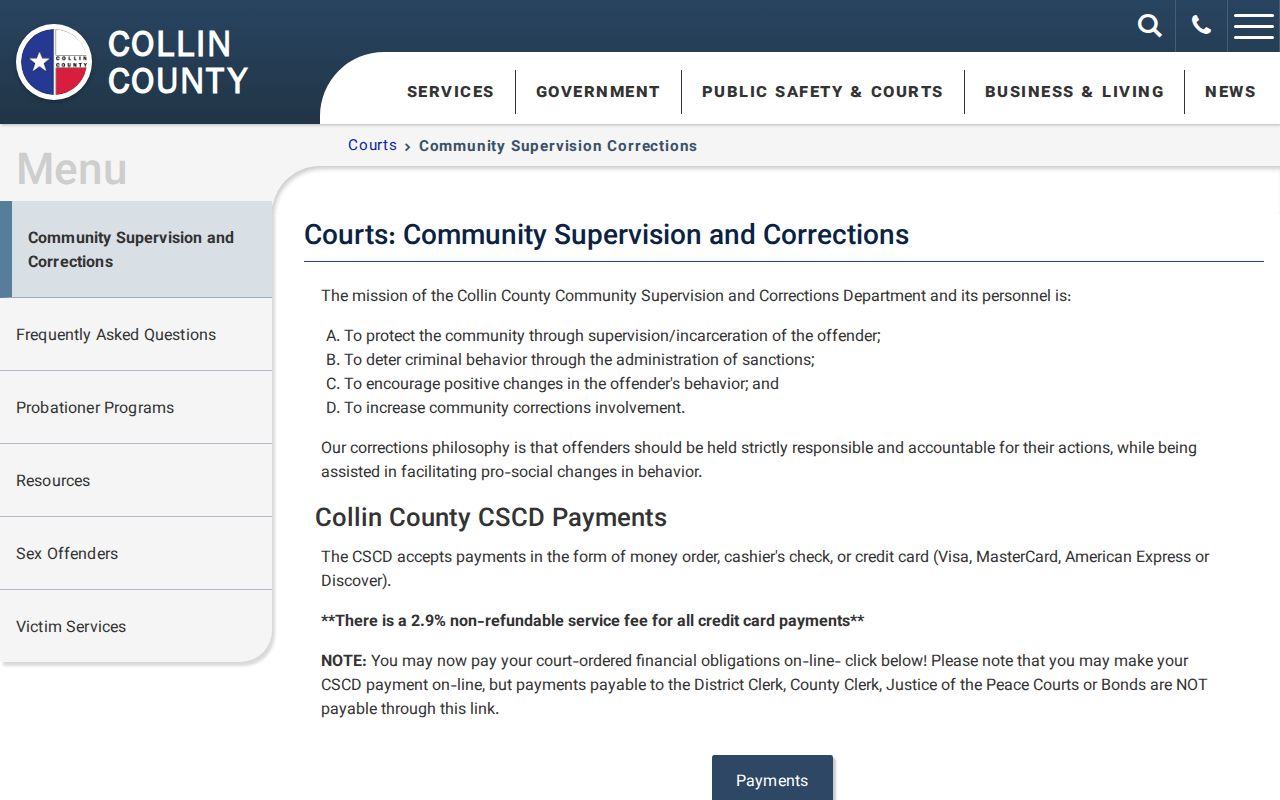
The program material includes CCL7 DWI/Drug Court, the V.A.L.O.R. veterans program, a specialized sex offender caseload, and S.C.O.R.E. work with the sheriff. Parole remains separate. The Texas Board of Pardons and Paroles makes release and revocation decisions, while the TDCJ Parole Division provides field supervision. IVSS offers free confidential custody and parole notifications.
Sealed, Expunged & Restricted
Texas expunction under Code of Criminal Procedure Chapter 55A can require identified agencies to destroy or return qualifying records. Eligibility may arise from an acquittal, pardon, certain dismissal or no-charge outcomes, identity theft, mistaken identity, or another stated ground. A conviction does not vanish merely because time passed.
An order of nondisclosure under Government Code Chapter 411 is different. It limits public release of qualifying information but does not erase every government record, and listed justice or authorized agencies can still gain access. A dismissal alone is neither remedy. Juvenile records follow separate Family Code confidentiality rules and must not be routed through adult search steps.
Collin County petitions go through the District Clerk under venue rules. Its agency sheet names the arresting agency, sheriff or jail, DA Appellate Division, clerk and court, CSCD when relevant, DPS, and other holders. Only agencies tied to the event belong on the petition. Current filing cost depends on the service recipients and clerk schedule.
Collin County Justice Record History
Collin County organized in 1846, and its first District Court met that year. The old prison later became a Recorded Texas Historic Landmark and a contributing part of McKinney's commercial historic district. Modern criminal records now sit across two main nodes: the Bloomdale courthouse campus and the sheriff and detention complex on Community Avenue.
The Community Avenue complex followed six years of planning. Ground broke in January 1992, construction began that March, the Sheriff's Office moved in during January 1994, and detention opened in March. Its direct-supervision design moved the jail far from the old courthouse-and-cell model. Recent county project reporting also tracks large detention and courthouse facility accounts. Those are project-account totals, not a claim that one new jail appropriation was made.
This history has a practical result. Collin County criminal files are dispersed by function. Court proceedings stay with clerks at Bloomdale, while sheriff reports and county booking data stay with their custodians on Community Avenue.
Criminal Records by City in Collin County
Plano, McKinney, and Frisco are the three city guides selected by incorporated-city population. Their police departments keep the reports they create, and municipal courts hold fine-only city matters. A later Class A or B misdemeanor or felony filed in Collin County moves to the County Clerk or District Clerk. Each city channel therefore adds local detail without replacing county or DPS records.
Plano Criminal History
Police transparency, calls for service, and municipal court request routes.
McKinney Criminal History
Police 2 Citizen reports, city warrants, arrests, and municipal case access.
Frisco Criminal History
Written police requests and eCourt tools for city judicial records.
Municipal records are narrow. A city citation may show the charge, citation number, plea, setting, judgment, and compliance status, but it will not supply a District Clerk felony file.
Collin County Record Boundary Clues
City names and ZIP codes can mislead. Plano and Frisco extend across county lines, and Frisco has substantial parts in both Collin and Denton Counties. A city police report remains with that city department, while the jail and trial clerk depend on the county where the event and filing occurred.
Start with the report or citation. Note the agency name, report number, court, county, and jail. Those clues are more useful than the mailing address alone. McKinney offers the cleanest local chain: MPD P2C for police event detail, the Collin County roster for county detention, and the Judicial Search for a filed county charge.
When the path crosses Texas systems, keep their scope distinct. A municipal court covers fine-only city matters. Collin County clerks cover the county courts stated in their search ranges. DPS provides a public conviction and deferred-adjudication product or a fingerprint-based personal review, not a full substitute for each local file.